
While most business owners know they are legally required by their state to carry workers compensation insurance, very few actually take the time to understand the granular details of the coverage before an incident occurs. When an employee suddenly gets injured on the job, the ensuing panic is almost always compounded by widespread uncertainty over who exactly pays for what. This confusion leads to immense and unnecessary stress for both the well-meaning employer and the injured, vulnerable worker. Treating your policy as a mere administrative box to check is a fundamental mistake.
This guide serves as a clear, straightforward breakdown of the core benefits provided by a standard policy, ensuring that business owners and their management teams are fully prepared long before an unexpected accident happens on the company floor.
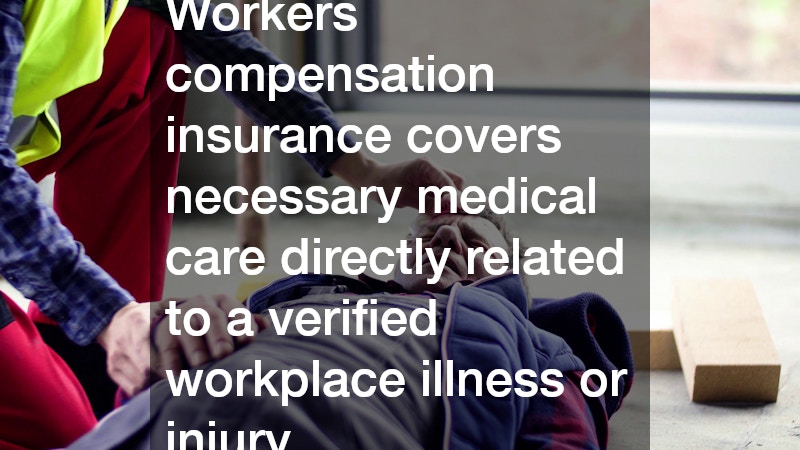
Immediate and Ongoing Medical Expenses
The primary and most widely recognized function of workers compensation insurance is to comprehensively cover all necessary medical care directly related to a workplace injury or a verified occupational illness. When an employee is hurt while performing their standard job duties, this policy steps in to absorb the heavy financial blows of the healthcare system. This safety net encompasses emergency room visits, emergency and elective surgeries, specialist doctor appointments, extended hospital stays, and all required prescription medications. It is critical for employers to remember—and to communicate to their staff—that employees should never be asked to use their personal health coverage or pay out-of-pocket deductibles for a legitimate, approved workplace injury. The medical providers typically bill the carrier directly, ensuring the injured worker can focus entirely on their physical healing rather than drowning in unexpected medical debt.
Lost Wages and Disability Benefits
One of the biggest concerns for any injured employee is how they will survive financially when they are physically unable to work during their prolonged recovery period. How do they pay their mortgage or buy groceries when their paycheck suddenly stops? This is where the wage replacement features of your policy become an absolute lifeline. The policy typically pays a specific percentage, very often around two-thirds, of the worker’s average weekly wage while they are officially sidelined by a physician. Navigating these classifications is a core feature of workers compensation insurance, as it categorizes the severity of the situation. For instance, Temporary Total Disability applies when the worker is fully out of commission but is expected to make a full recovery. Conversely, Permanent Partial Disability applies when the worker has suffered a permanent impairment, such as losing a finger or suffering irreversible joint damage, but can eventually return to the workforce in some modified capacity.
Rehabilitation and Physical Therapy
Quality medical coverage does not simply stop once the initial emergency is handled and the employee is discharged from the hospital; it extends well into the long and often arduous recovery phase. A robust policy details the complete inclusion of physical therapy sessions, occupational therapy, and the purchasing of any necessary medical equipment required to restore the employee’s health. Whether the worker needs crutches, customized orthopedic braces, or a wheelchair, the policy is designed to cover those exact costs. Furthermore, if an employee’s severe injury permanently prevents them from returning to their previous, physically demanding role, their workers compensation insurance policy may even cover extensive vocational rehabilitation. This incredible benefit pays for retraining, new skill development, or higher education for a completely new career path, ensuring the employee remains a viable, employable member of the workforce despite their new physical limitations.
Death Benefits for Fatal Incidents
While it is an incredibly grim topic that no business owner ever wants to consider, understanding the coverage provided in the event of a fatal workplace accident is absolutely vital. If the absolute worst-case scenario occurs on your watch, the policy provides immediate and ongoing financial assistance to the grieving family left behind. Initially, the policy covers funeral and burial expenses up to a certain statutory limit, relieving the immediate and crushing financial burden on the deceased worker’s relatives. Beyond the burial costs, it also provides critical, ongoing financial support. This typically manifests as a specified portion of the deceased worker’s historical wages, paid out systematically to the employee’s legal dependents, such as a surviving spouse or minor children. Knowing this protection is in place provides a small but necessary measure of comfort in the face of an unthinkable tragedy.
Crucial Exclusions and Denied Claims
It is important to clearly establish the boundaries of this coverage. While the framework is designed to be a no-fault system—meaning the employee does not have to prove the employer was negligent to receive immediate benefits—it is absolutely not a blank check for any injury that happens to occur on company time or property. There are specific, rigid scenarios that claims adjusters will typically deny outright. Common exclusions include self-inflicted injuries, injuries sustained while the employee was actively under the influence of illegal drugs or alcohol, injuries resulting from a physical workplace altercation or horseplay that the injured employee intentionally started, or injuries occurring during the standard daily commute to and from the workplace. Business owners must clearly communicate a zero-tolerance policy for substance abuse and workplace violence to protect both the physical safety of their employees and the legal validity of their ongoing coverage.
Providing a Comprehensive Safety Net
At its core, this critical business policy acts as a highly comprehensive safety net, covering crushing medical bills, replacing vital lost wages, funding essential physical rehabilitation, and supplying necessary dependent benefits during catastrophic events. Understanding these foundational pillars allows modern employers to handle inevitable workplace accidents with unwavering confidence, strict legal compliance, and genuine human empathy, knowing their dedicated team is financially protected.
