Efficient storage is an important part of successful warehouse operations. Businesses that manage large quantities of inventory need storage solutions that make good use of available space while keeping products organized and accessible. Traditional shelving and pallet storage systems can work well for many facilities, but some warehouses need a higher-density approach.
Drive in racking is designed to allow forklifts to enter storage lanes and place pallets deeper within the system. This configuration can help businesses make better use of their available floor space and create a storage arrangement suited to certain types of inventory.
Understanding how this system works and where it can be useful can help warehouse operators determine whether it fits their needs.
Working Well With High-Volume Inventory
Some businesses need to store large quantities of the same or similar products. Food distributors, beverage companies, manufacturers, and other operations may have inventory that is well suited to high-density storage.
When products have similar storage requirements and do not need to be accessed individually throughout the day, deep-lane pallet storage can provide an efficient solution.
Businesses should consider how frequently different products are moved before choosing this type of system. Inventory that requires frequent individual access may be better suited to a different storage configuration.
Reducing the Need for Extensive Aisles
Warehouse aisles provide space for forklifts and employees to move between storage locations, but they also consume valuable floor area. A storage system that reduces the number of required aisles can potentially increase the amount of space dedicated to inventory.
With drive-in storage, forklifts can enter designated lanes rather than needing to access every pallet position from a separate aisle. This allows pallets to be positioned deeper within the storage structure.
Although fewer aisles can improve storage density, the warehouse still needs adequate space for equipment to maneuver safely. Layout planning should account for forklift dimensions, turning requirements, entry points, and operator visibility.
Creating an Organized Storage Layout
A well-designed storage system can help businesses maintain an organized warehouse. Pallets can be assigned to specific lanes according to product type, size, batch, or other inventory characteristics.
Clear labeling can make it easier for employees to identify the correct storage locations. Businesses can also use inventory management software, barcode systems, or other tracking methods to maintain visibility over stored products.
Organization becomes especially important when pallets are stored several positions deep. Employees need a clear understanding of where products belong and how they should be retrieved.
Supporting Inventory Rotation
Inventory rotation should be considered when selecting any warehouse storage system. Businesses that handle products with expiration dates or specific usage sequences need to know how inventory will move through the storage lanes.
The configuration may be particularly suitable for last-in, first-out inventory practices because pallets can be loaded and retrieved from the same access point. However, businesses that require strict first-in, first-out rotation may need a different storage approach or a system designed specifically to support that requirement.
Understanding inventory turnover and product characteristics before installation can help businesses choose a system that aligns with their operational processes.
Considering Forklift Operations
Forklift access is a central part of this storage configuration. Operators need to enter storage lanes to place and retrieve pallets, so equipment compatibility and operator training are important considerations.
The warehouse layout should provide sufficient space for forklifts to approach the structure and enter lanes safely. Operators should also understand weight limits, clearance requirements, and appropriate loading procedures.
Businesses should verify that their existing material-handling equipment is compatible with the proposed system. In some cases, changes to forklifts or operating procedures may be necessary.
Evaluating Whether the System Fits Your Warehouse
Drive in racking can be an effective option for businesses that prioritize high-density storage and handle substantial quantities of similar inventory. However, it is not necessarily appropriate for every warehouse.
Businesses should evaluate their inventory characteristics, access requirements, turnover rates, available space, ceiling height, forklift equipment, and future growth plans before making a decision.
Professional planning can help identify the most appropriate configuration for a specific facility. A detailed evaluation can also help businesses balance storage capacity with accessibility and operational efficiency.
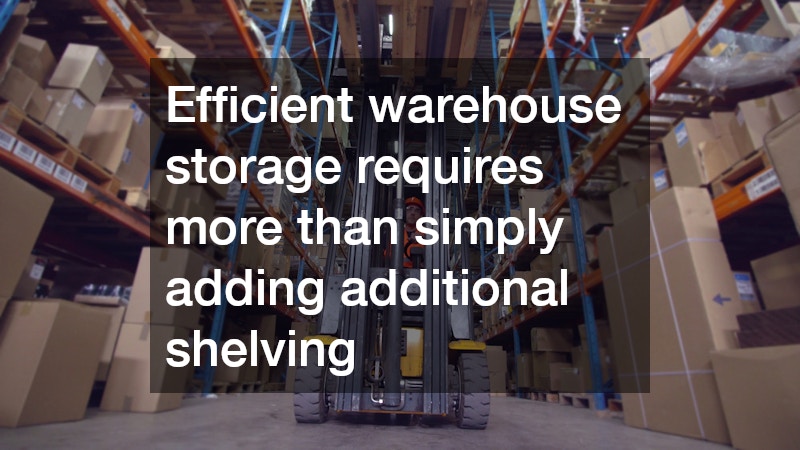
Efficient warehouse storage requires more than simply adding additional shelving. Businesses need to consider how much inventory they store, how frequently products move, how employees access products, and how available space can be used effectively.
Drive in racking can help maximize storage density by allowing pallets to be positioned deeper within designated lanes. This can reduce the amount of floor space dedicated to aisles and create additional capacity for businesses with suitable inventory requirements.
Before choosing this type of system, warehouse operators should evaluate their products, equipment, workflow, safety requirements, and long-term storage goals. With careful planning and proper use, a high-density storage configuration can help businesses make better use of their warehouse space while supporting organized and efficient operations.