
Every business owner eventually learns a hard, expensive lesson about physical infrastructure: buildings and heavy equipment rarely fail at convenient times. A sudden mechanical breakdown, a backed-up drainage line, or an unexpected compliance shutdown does not merely trigger a steep emergency repair invoice. It halts daily revenue, idles payroll, damages inventory, and erodes the trust you have worked years to build with clients and tenants. When you operate in reactive mode—frantically searching online for a technician while water pools on a warehouse floor or production sits at a standstill—you forfeit every ounce of negotiating leverage on pricing, turnaround time, and workmanship quality.
Transitioning from reactive firefighting to proactive facility stewardship is one of the highest-return operational shifts a growing company can make. Instead of treating building upkeep as an afterthought, resilient organizations build a pre-vetted roster of specialized commercial contractors before an emergency ever occurs. By categorizing your facility’s critical systems, locking in preventative maintenance schedules, and establishing clear service-level agreements, you transform unpredictable capital shocks into steady, budgetable operating expenses. Here is how to structure your vendor roster, vet qualified partners, and protect the long-term value and uptime of your commercial footprint.
Centralize Oversight Before Signing Individual Trade Contracts
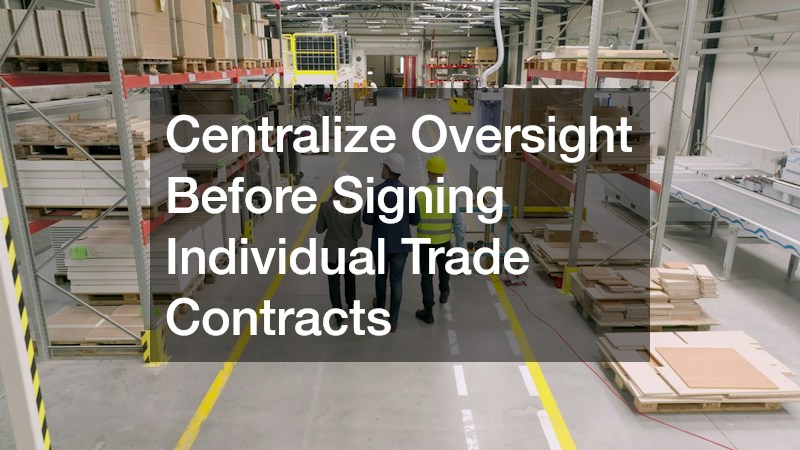
As a company scales from a single storefront or small shop into a multi-bay warehouse, corporate campus, or light-industrial facility, the administrative burden of coordinating dozens of independent trades quickly overwhelms internal leadership. When your operations manager spends half the week chasing down landscaping quotes, tracking roofing warranties, and verifying contractor insurance certificates, core business growth suffers. Partnering with a dedicated property management service creates a single point of accountability across your entire physical footprint, centralizing vendor dispatching, lease compliance, and routine preventative maintenance scheduling under one operational roof.
However, handing over oversight does not mean relinquishing financial visibility. To ensure a third-party management partner genuinely protects your bottom line rather than simply passing along inflated subcontractor invoices, establish strict guardrails before signing an agreement:
- Cap subcontractor markups in writing: Require complete transparency on third-party trade bills, negotiating either direct pass-through pricing or a strict percentage cap on administrative markups for specialized repairs.
- Audit their existing vendor bench: Ask to review the insurance minimums, licensing credentials, and guaranteed response times of the tradespeople they already rely on for electrical, plumbing, and structural work.
- Mandate quarterly physical walkthroughs: Insist on documented, room-by-room and exterior inspections every ninety days—complete with timestamped photos—so minor issues like deteriorating roof flashing or failing weatherstripping are resolved while they are still inexpensive fixes.
- Separate routine upkeep from capital improvements: Establish clear spending thresholds that allow your management partner to authorize minor preventative fixes immediately while requiring executive sign-off on major equipment replacements.
Audit Underground Infrastructure and Wastewater Systems Annually
Because subsurface utilities sit out of sight beneath asphalt parking lots, loading docks, and concrete slabs, they are frequently the most neglected assets on a commercial balance sheet. Unfortunately, ignoring underground drainage and waste systems almost always results in catastrophic, high-cost failures. Ground shifting, freeze-thaw cycles, corrosive industrial runoff, and heavy semi-truck traffic continuously stress buried structures. By the time a sinkhole opens in a shipping yard or wastewater backs up into a production area, emergency excavation can easily run into the tens of thousands of dollars—not counting environmental fines or forced facility closures.
Proactive subsurface care requires scheduling specialized inspections before surface symptoms appear. Incorporating routine manhole rehabilitation services into your multi-year capital maintenance plan allows technicians to seal structural cracks, stop groundwater infiltration, and apply protective linings before surrounding soil erodes beneath heavy vehicle lanes. At the same time, facilities operating off municipal sewer grids—or commercial kitchens, food processors, and industrial sites generating heavy grease and solids—must maintain a strict schedule with a commercial septic pumping service calibrated to actual shift volume and occupancy rather than arbitrary calendar guesses.
To keep your underground infrastructure compliant and structurally sound year-round, implement these practical safeguards:
- Request closed-circuit camera footage: Never settle for a verbal assurance that a line looks clear; require digital video inspection files and written condition logs after every subsurface service so you can track gradual wear over time.
- Verify waste manifesting and disposal compliance: Confirm that your wastewater contractor provides official regulatory manifests proving all pumped sludge and industrial runoff are transported to licensed treatment facilities, shielding your company from environmental liability.
- Inspect surface frames and covers during seasonal transitions: Have your maintenance team check access lids for rocking, cracking, or settling every spring and autumn, as loose covers rapidly accelerate structural degradation underneath.
- Map all subsurface shutoffs and access points: Maintain an updated, laminated site utility map in your facility office so emergency responders and visiting contractors never waste critical hours locating buried tanks or cleanouts.
Schedule Preventative Care for Material Handling and Vertical Transport
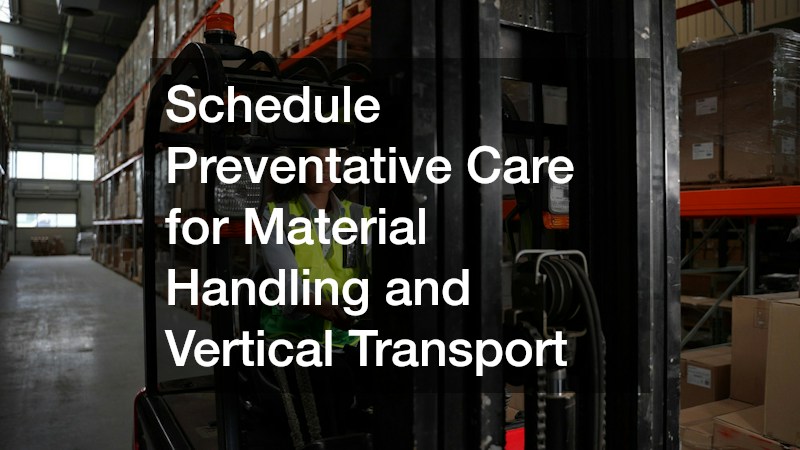
In manufacturing plants, distribution centers, and fabrication shops, material handling machinery forms the circulatory system of daily revenue. When automated lines or overhead lifting gear stop moving, skilled operators stand idle, outbound shipments miss carrier cutoffs, and downstream customer commitments unravel. Too many business owners rely on basic internal greasing and visual checks until a motor burns out or a structural component fails under load—turning a routine maintenance item into a multi-week shutdown waiting on custom-machined replacement parts.
Protecting throughput requires pairing internal daily operator checks with scheduled specialist inspections during planned off-shift windows. Working with experienced industrial millwrights to service chain conveyors ensures drive components are regularly measured for elongation, sprocket wear, tension accuracy, and lubrication breakdown before a snapped link damages surrounding framing or product batches. Simultaneously, facilities relying on overhead lifting must retain certified technicians to perform statutory load testing, hoist brake adjustments, wire rope inspections, and runway rail alignment on every indoor bridge crane on the shop floor.
You can dramatically reduce unplanned equipment downtime by building these habits into your floor operations:
- Stock a vendor-recommended critical spares kit: Ask your material handling technicians to identify the top five long-lead wear components—such as specialized bearings, drive chains, limit switches, and pendant controllers—and keep them shelved on-site.
- Enforce pre-shift operator checklists: Require machine operators to complete a two-minute visual and auditory check at the start of every shift, logging unusual vibrations, slack, or sluggish braking before full production loads are applied.
- Align maintenance windows with inventory cycles: Schedule deep mechanical tear-downs, ultrasonic testing, and alignment calibrations during planned holiday shutdowns or seasonal lulls so technicians have unobstructed access to equipment.
- Maintain airtight inspection binders: Keep organized digital and physical logs of every load test, tension adjustment, and safety certification to satisfy OSHA auditors and commercial property insurers immediately upon request.
Lock In Rapid-Response SLAs for Climate Control and Building Access
Not every building system can tolerate a forty-eight-hour wait for a service van. Certain commercial assets protect high-value perishable inventory or provide essential vertical access for employees, customers, and freight. When temperature-controlled storage drifts out of specification, thousands of dollars in pharmaceuticals, food products, or sensitive raw materials can spoil within hours. Likewise, when passenger or freight lifts stall in a multi-story office, medical building, or warehouse, accessibility compliance is compromised, and internal logistics grind to a halt.
For mission-critical systems like these, paying standard time-and-materials rates to whichever contractor happens to have an open slot is an unacceptable operational gamble. Instead, establish a priority dispatch agreement for commercial refrigeration repairs that contractually guarantees a sub-four-hour emergency response window alongside quarterly condenser coil cleanings, defrost cycle checks, and refrigerant leak diagnostics. In parallel, sign a comprehensive preventative maintenance agreement with a licensed elevator company that covers monthly safety testing, hydraulic fluid analysis, door operator calibration, and state inspection certifications.
When negotiating service-level agreements for climate control and vertical transport, pay close attention to contract fine print:
- Avoid bare-bones “oil and grease” contracts: Basic maintenance tiers often appear inexpensive upfront but exclude routine replacement parts, leaving you exposed to steep surcharges every time a relay, sensor, or valve wears out.
- Define response time versus arrival time: Ensure your contract specifies when a qualified technician must physically arrive at your loading dock—not merely when a dispatcher acknowledges your phone call.
- Integrate remote temperature and fault monitoring: Install cellular-connected sensors on cold storage units and mechanical rooms so your vendor receives automated alerts the moment temperatures drift or fault codes trigger, often allowing them to intervene before staff even notice a problem.
- Verify parts availability for legacy equipment: If your building operates older chillers or lift controllers, confirm your vendor maintains local inventory of compatible boards and compressors rather than sourcing obsolete components after a breakdown.
Maintain Fleet Emissions Compliance and Clean Power Systems
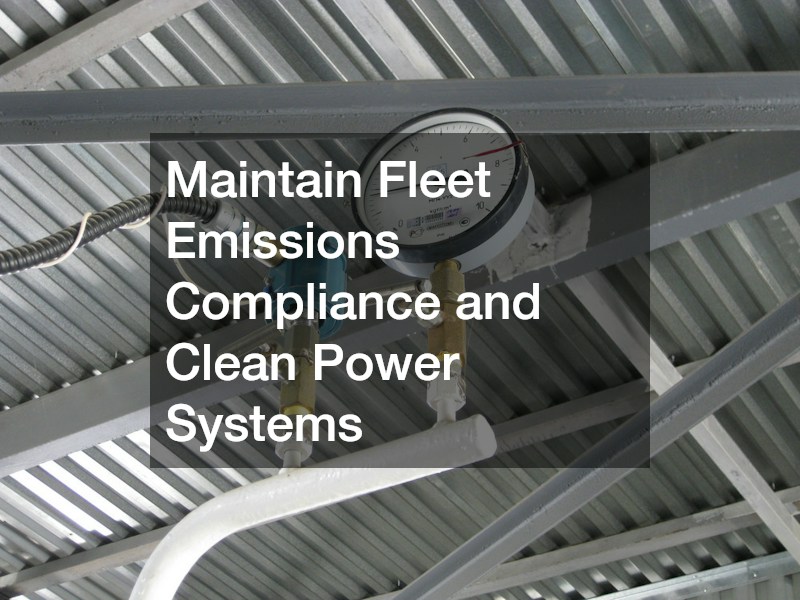
Commercial facilities rarely operate in isolation from heavy diesel equipment. Whether your business manages regional delivery box trucks, yard spotter tractors, heavy material handlers, or stationary backup generators protecting data rooms and production lines, modern emissions systems require disciplined maintenance. Today’s clean-diesel engines rely on sophisticated exhaust aftertreatment components to trap soot and particulate matter. When these systems are neglected—especially on vehicles that spend hours idling in loading zones or generators that only run during brief weekly test cycles—soot accumulates rapidly, triggering engine derates that force vehicles into limp mode or cause backup generators to shut down right when a grid outage strikes.
Waiting for a dashboard warning light or an emissions inspection failure is the most expensive way to manage exhaust health. Integrating scheduled diesel particulate filter services into your standard preventative maintenance calendar allows technicians to perform thermal regeneration, pneumatic cleaning, and ash-load diagnostics before backpressure damages expensive turbochargers or requires full filter replacement.
Keep your fleet and emergency power systems compliant and reliable with a few straightforward operational practices:
- Track engine idle hours alongside mileage: Standard odometer intervals fail to capture soot buildup caused by yard idling and low-load generator testing; trigger exhaust cleaning based on total engine run hours.
- Run backup generators under meaningful load: Coordinate annual load-bank testing so standby diesel engines reach optimal operating temperatures, burning off wet-stacking carbon deposits and verifying full power capacity.
- Standardize pre-trip driver inspections: Train drivers and yard operators to report sluggish acceleration, increased fuel consumption, or active regeneration indicators immediately rather than ignoring warning lamps until a route is underway.
- Keep a rotated spare filter on the shelf: For businesses operating standardized truck fleets, keeping one clean, tested filter unit in inventory allows mechanics to swap a clogged unit in under two hours and clean the dirty core offline without sidelining the vehicle.
Plan for Site Expansion, Structural Modifications, and Temporary Workforce Needs
Even the best-maintained facility eventually requires structural adaptations to support business growth. Installing new production machinery, routing heavy electrical conduits through reinforced concrete, tying into utility mains, or accommodating seasonal staffing surges all introduce temporary disruptions to an active workplace. When business owners treat site modifications and temporary capacity needs as last-minute logistics details, contractors end up blocking fire lanes, damaging post-tensioned slabs, or creating sanitary bottlenecks that frustrate employees and violate local health codes.
Successful facility leaders coordinate specialized project vendors weeks ahead of any physical alteration. When mounting heavy equipment or routing new utility lines, hiring precision drilling services for concrete core boring, anchor installation, and subsurface pathing ensures clean structural penetrations without cracking surrounding slabs or striking embedded rebar and conduits. At the same time, whenever restroom renovations shut down interior plumbing—or when peak shipping seasons and outdoor site projects push headcount beyond permanent facility limits—arranging commercial-grade portable toilet rentals complete with scheduled pump-outs and handwashing stations keeps your workforce productive and compliant with workplace sanitation standards.
Building Your Facility Vendor Playbook

Resilient commercial operations are rarely built on luck; they are built on preparation. Every system inside and beneath your property—from underground drainage and rooftop climate units to production conveyors and fleet engines—follows a predictable lifecycle of wear. When you assemble a roster of reliable, specialized contractors before an emergency strikes, you gain partners who understand your building’s history, respect your operational windows, and stand behind their work with clear service guarantees.
