
Starting a new venture is exciting, but the infrastructure costs hiding behind the scenes can quietly drain a budget before the doors ever open. Many first-time property owners and entrepreneurs focus on the visible expenses like signage or inventory, only to be blindsided by permits, equipment access, and system installations that were never on their radar. Understanding these costs early gives you the power to plan realistically instead of scrambling for extra funding mid-project. This guide breaks down the infrastructure expenses that most often catch new property owners off guard, so you can budget with confidence.
Planning for Temporary Facilities During Construction
Before a single wall goes up, construction sites need basic amenities for workers, and that often means renting temporary restroom units for the duration of the project. Many first-time property owners underestimate how long a build actually takes, which means the cost of bathroom trailer rentals can stretch far beyond the original estimate. These units are not a luxury; most local health and safety codes require adequate sanitation facilities on any active job site.
Pricing for these rentals depends on the number of workers, the length of the project, and whether upgraded units with running water are required. It helps to get a realistic timeline from your contractor before signing a rental agreement, since extensions almost always cost more than the initial quote.
- Ask contractors for a realistic construction timeline before budgeting rental duration
- Compare weekly versus monthly rental rates, since longer terms often cost less per day
- Confirm whether ADA-compliant units are required for your specific job site
- Factor in delivery and pickup fees, which are sometimes billed separately
Budgeting for Building Security Systems
New property owners frequently underestimate the cost of securing a commercial space, especially when it comes to controlling who can enter and exit the building. Access control installation involves more than just locks; it includes wiring, card readers, software licensing, and ongoing maintenance agreements. Skipping this step early often means paying more later to retrofit a building that was not designed with modern security in mind.
The cost of these systems varies widely depending on the number of entry points and the level of sophistication needed, from simple keypad entry to biometric scanning. It is worth getting quotes during the design phase rather than after construction, since running wiring through finished walls is significantly more expensive.
- Get security quotes before finalizing floor plans, not after
- Consider scalable systems that can grow with additional entry points later
- Ask about maintenance contracts, since software updates are often ongoing costs
- Factor in employee training time for new security procedures
The Overlooked Expense of Heavy Equipment on Site
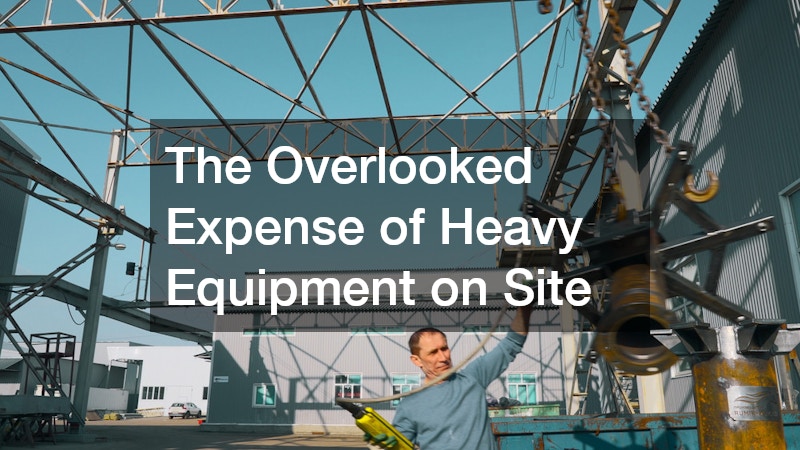
Many new ventures require heavy materials, HVAC units, or structural components to be lifted into place, and this is where costs can spiral quickly if not planned for in advance. A standard mobile crane service can run anywhere from $200 to $500 per hour depending on tonnage and region, while specialized rigs for larger loads can climb well past $1,500 per hour. Property owners often budget for the equipment itself but forget that the labor to operate and coordinate it carries its own significant price tag.
Crane service is often billed by the hour, but delays caused by weather, permitting, or site access can turn a half-day job into a multi-day expense. A single afternoon of high winds can push a lift to the next available slot, and if the crane operator’s schedule is booked, that could mean a week’s delay rather than a next-day fix. Narrow streets, overhead power lines, or insufficient setback space can also force operators to bring in additional stabilization equipment, adding hundreds or thousands of dollars before the actual lift even begins.
Permitting adds another layer of unpredictability. Many municipalities require lane closures, traffic control plans, or neighbor notifications before a crane can be positioned, and each of these steps can take days or weeks to clear. Property owners who fail to account for this line item, along with the standby fees charged when a crane sits idle waiting on approvals, are often shocked when the final invoice arrives.
Crane rental is only the visible tip of the equipment budget. Beyond the crane itself, rigging services are frequently needed to safely secure and maneuver heavy loads, and this specialized labor is priced separately from general lifting equipment. A certified rigger typically charges by the hour or by the complexity of the load, with day rates that can run several hundred dollars per crew member depending on the region and the weight class involved.
These two costs together can represent a significant portion of a project’s mechanical budget, especially for retrofits where existing structures complicate the lift. Tight clearances, load-bearing limitations, and the need for temporary shoring can all add hours to a job that would take a fraction of the time on an open greenfield site.
Founders also tend to underestimate ancillary charges: standby time if a lift gets delayed, permits for road closures or crane placement on public streets, and engineering surveys required to confirm a structure can bear the rigging load. Skipping these line items in an early budget almost guarantees a costly change order once the crane is already on site.
- Request itemized quotes that separate equipment rental from labor, fuel, and delivery costs so you can spot hidden markups
- Ask about minimum billable hours, which vary by provider — some bill a 4-hour minimum even for a 90-minute job
- Confirm site accessibility in advance (road width, overhead clearance, ground stability) to avoid last-minute rerouting or specialized-equipment fees
- Check permit and inspection timelines with your municipality, since idle equipment still accrues rental charges while you wait
- Build in a buffer day for weather-related rescheduling, especially for crane or excavation work sensitive to wind and rain
- Verify insurance and liability coverage on rented equipment to avoid surprise damage costs later
Roofing and Envelope Costs That Affect Long Term Budgets
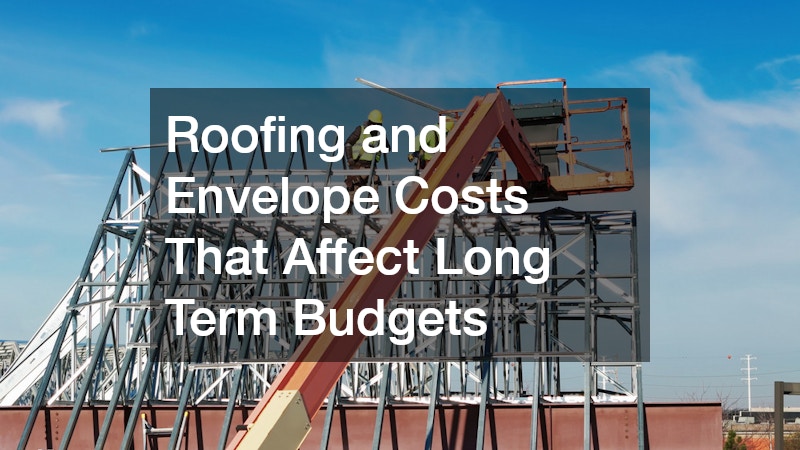
A building’s roof is one of the most expensive components to install or repair, and new property owners often underestimate how much this single system impacts the overall budget. Hiring a qualified commercial roofer early in the process can help identify structural issues before they become costly emergencies once the building is operational. Roofing materials, drainage design, and insulation requirements all factor into the final price, and cutting corners here tends to backfire within a few years.
It is also worth remembering that roofing warranties often depend on proper installation by a certified contractor, which means the cheapest quote is not always the most cost-effective choice over time. Getting a written scope of work that details materials, warranty terms, and maintenance schedules protects you from surprise expenses down the road.
- Request warranty documentation before signing any roofing contract
- Ask about drainage design, especially for flat commercial roofs
- Compare material lifespans against your long-term ownership plans
- Schedule a post-installation inspection to confirm work meets code
Entry and Loading Systems That Impact Daily Operations
For warehouses, distribution centers, or retail spaces with frequent loading activity, the type of door installed can significantly affect daily efficiency and energy costs. Rytec high speed commercial doors are a popular choice for operations that need fast open-and-close cycles to maintain temperature control and reduce energy loss. While the upfront cost is higher than a standard door, the long-term savings on climate control and labor time often justify the investment.
New owners sometimes choose the cheapest door option without considering how frequently it will be used, which leads to premature wear and costly replacements. It is worth mapping out daily traffic patterns before selecting door systems, since the right choice depends heavily on how the space will actually function.
- Estimate daily open-close cycles before choosing a door system
- Compare energy savings against upfront installation costs
- Ask about maintenance intervals for high-use commercial doors
- Consider insulation ratings if temperature control matters to your operation
Maintenance Costs That Sneak Up After Opening
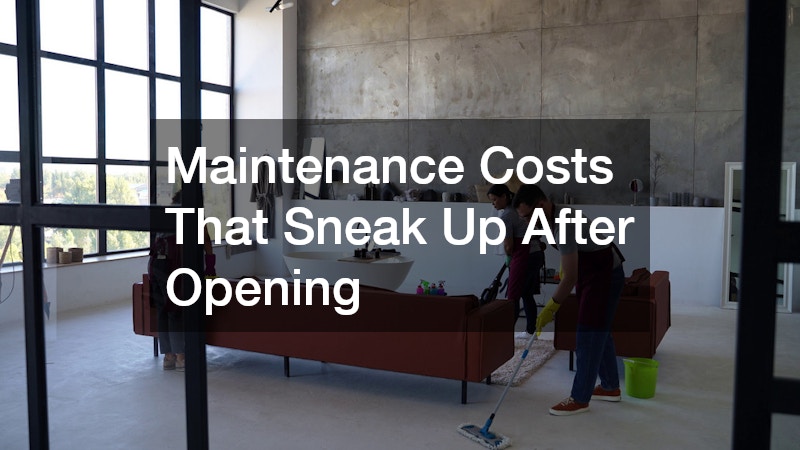
Once a venture is up and running, ongoing maintenance costs can be just as damaging to a budget as the initial construction expenses. Something as simple as commercial blind cleaning is often overlooked during planning, yet dirty or damaged window coverings can affect both energy efficiency and first impressions for customers or tenants. Regular maintenance schedules for these smaller systems help avoid larger replacement costs later.
Many new property owners assume maintenance is a future problem, but building these costs into the first-year budget prevents cash flow surprises. Setting up a simple annual maintenance calendar for less obvious building components can save thousands over time.
- Create a maintenance calendar covering all building systems, not just major equipment
- Ask vendors about recommended cleaning intervals for window treatments
- Track maintenance costs separately to identify patterns over time
- Consider bundling maintenance contracts for cost savings
Specialized Requirements for Food and Hospitality Ventures
Restaurant and hospitality ventures face a unique set of infrastructure requirements that other businesses do not, and few are as commonly underestimated as plumbing infrastructure. Restaurant grease traps are required by most municipalities to prevent fats and oils from entering the sewer system, and installation or upgrade costs can be substantial depending on kitchen size. Failing to budget for proper trap sizing often results in code violations or emergency plumbing repairs after opening.
Beyond the initial installation, grease traps require regular pumping and cleaning, which is an ongoing operational cost that new restaurant owners frequently forget to include in their monthly budget projections. Working with a plumber familiar with local health codes during the planning phase helps avoid costly redesigns later.
- Confirm local code requirements for grease trap sizing before finalizing kitchen layout
- Budget for regular pumping schedules as an ongoing operational cost
- Ask about inspection requirements specific to your municipality
- Factor in downtime costs if servicing requires temporary kitchen closure
Valuation Needs for Niche Asset-Based Ventures
Not every new venture involves traditional real estate, and businesses built around specialized assets face their own infrastructure-related costs. For ventures involving aviation, aircraft appraisals are often required for financing, insurance, or partnership agreements, and these appraisals carry a real cost that is easy to overlook during early planning stages. Skipping proper valuation can create problems later when securing loans or negotiating with investors.
Accurate appraisals also protect owners from disputes down the line, particularly when assets are used as collateral or shared among multiple stakeholders. Getting a professional valuation early, even if it feels like an unnecessary expense at the time, tends to save money and legal headaches later.
- Request appraisals from certified professionals recognized by lenders
- Keep appraisal documentation updated as asset conditions change
- Factor appraisal costs into financing timelines, not just closing costs
- Ask whether insurance providers require specific appraisal formats
Branding and Communication Infrastructure Often Forgotten
While most infrastructure conversations focus on physical buildings and systems, branding materials are a real cost that new ventures often underestimate. Businesses that rely on printed materials for internal record keeping, client documentation, or promotional purposes may need journals printed in bulk, and pricing varies significantly based on paper quality, binding, and order volume. These costs seem minor individually but add up quickly during the launch phase when multiple materials are needed at once.
Planning ahead for printing needs, rather than ordering reactively, often results in better pricing through bulk discounts and fewer rush order fees. It is worth requesting quotes from multiple printers early in the launch timeline to avoid last-minute price markups.
- Request bulk pricing quotes before your launch date approaches
- Compare paper and binding options against your actual use case
- Avoid rush orders by planning printing needs several weeks in advance
- Keep a running list of all printed materials needed for daily operations
Infrastructure costs rarely announce themselves clearly at the start of a project, which is exactly why so many new ventures run into trouble before their grand opening. By researching these often overlooked expenses now, from temporary facilities to specialized valuations, you put yourself in a much stronger position to launch on budget and on schedule. Take time to request detailed quotes, build in buffer costs, and talk to professionals early in your planning process. A little extra diligence today can be the difference between a smooth launch and a costly scramble down the road.
