
The first year in a new commercial space is full of predictable costs: rent, buildout, permits, initial equipment. It is the second year that catches many founders off guard, when the one-time startup expenses fade and a new layer of recurring, easy-to-forget costs takes their place. Maintenance contracts, replacement equipment, and compliance obligations that felt distant in year one suddenly show up on the books. Understanding these costs before they arrive can mean the difference between a healthy year two and a scramble for emergency cash.
Indoor Air Quality Maintenance Adds Up
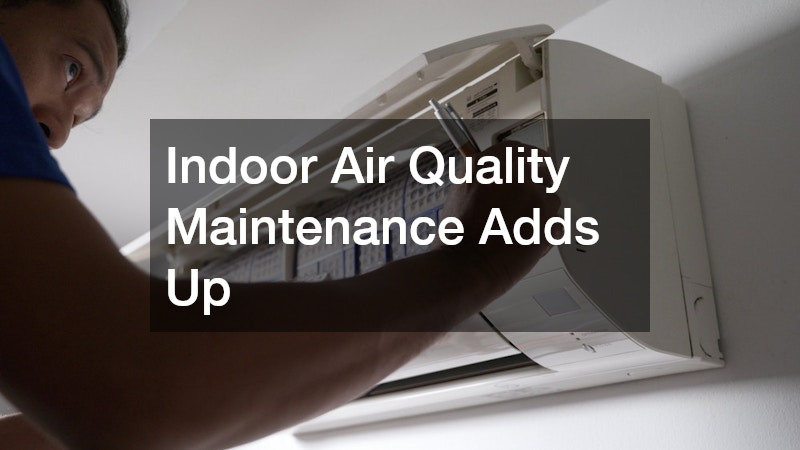
Many founders budget for an HVAC system during buildout but forget that keeping it running well is an ongoing expense, not a one-time purchase. Filters need regular replacement to keep air quality acceptable and to prevent strain on the system that leads to bigger repair bills later. Commercial air filters cost more than residential ones and often need swapping on a stricter schedule depending on square footage, occupancy, and local air quality.
This is one of those line items that seems minor until you multiply it across a full building and a full year. Skipping filter changes to save money in the short term almost always costs more later in reduced system efficiency and higher energy bills.
- Set a recurring calendar reminder or vendor contract for filter swaps
- Budget for higher-grade filters if you operate in a dusty, high-traffic, or food-service environment
- Track filter costs separately from general HVAC maintenance so you can spot trends
- Ask your vendor about bulk pricing if you manage multiple units or locations
Furniture Wear and Replacement Cycles Arrive Faster Than Expected
Desks, chairs, and workstations bought in a rush during year one often start showing wear by year two, especially in shared or high-traffic spaces. Founders frequently assume commercial office furniture is a single upfront cost, but ergonomic chairs, reception seating, and modular desks all have realistic lifespans that shorten with daily use. A budget task chair used eight hours a day typically holds up for two to three years before the gas lift, casters, or upholstery start failing, while higher-end models can stretch to five or more.
Reception seating and communal tables take a different kind of abuse — scuffs, stains, and loosened joints from constant repositioning — and often need refreshing sooner than desks that stay fixed in place. Standing desks with motorized bases add another variable, since the electronic lift mechanisms can wear out even if the desktop itself looks fine. Founders who bought a full office’s worth of furniture at once also face a hidden risk: because everything was purchased in the same batch, it tends to degrade in the same window, creating a cluster of failures rather than a steady trickle.
Budgeting a modest annual allowance for replacements and repairs — even just 5 to 10 percent of the original furniture spend — prevents a sudden large expense when several pieces fail around the same time. Staggering replacement purchases across the year, rather than waiting for visible breakdowns, also helps smooth out cash flow and avoids the scramble of outfitting an entire office overnight.
It also helps to think about furniture in tiers rather than as one lump category. High-use items like task chairs typically take a beating from daily adjustments, rolling, and constant weight-bearing, so they often need repair or replacement within 2-3 years in a busy office. Conference tables, storage cabinets, and reception furniture see far less wear and can often stretch to 5-7 years before needing attention.
Breaking your inventory into these tiers lets you build a staggered replacement budget instead of guessing at a single “furniture” line item. For example, you might plan for chair refreshes annually or biennially, desk and workstation upgrades every 3-4 years, and larger case goods only every 5+ years. This keeps costs predictable rather than lumped into one painful quarter where everything seems to fail at once.
It’s also worth tracking wear by usage pattern, not just item type. A chair used by one employee eight hours a day wears differently than a shared hot-desk chair used by three different people in rotation — the latter often needs replacing sooner despite looking newer on paper. Building that nuance into your budget forecasts will save you from being blindsided when “like-new” furniture starts failing ahead of schedule.
- Inspect chairs and desks quarterly for structural wear — check caster wheels, pneumatic lifts, hinges, and joints, not just cosmetic scuffs or stains
- Keep manufacturer warranty information and purchase dates on file, since most office chairs carry 3-5 year warranties that cover mechanical failure but require proof of purchase
- Consider refurbished or commercial-grade pieces for high-wear areas like reception, conference rooms, and shared desks, where furniture sees 3-4x the use of a private office
- Budget for a 10-15% annual replacement rate on seating specifically, since chairs used 8+ hours a day typically wear out faster than desks or storage units
- Set aside a small annual furniture fund (roughly 1-2% of your furniture’s original cost) rather than treating replacement as a surprise expense
Short Term Equipment Needs Can Strain a Tight Budget
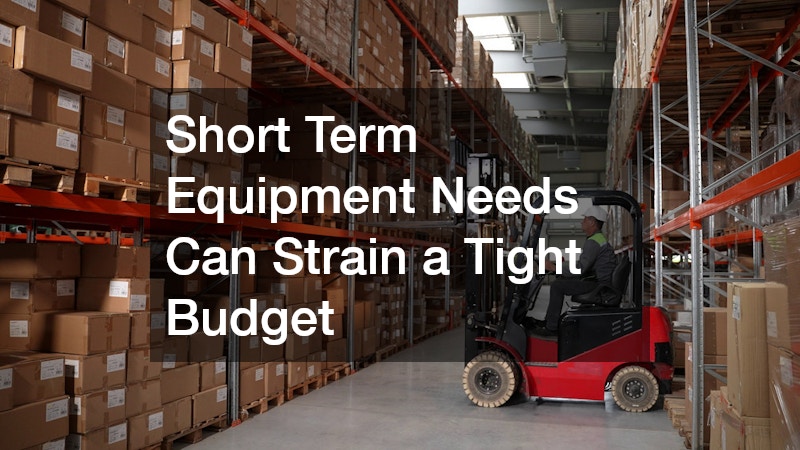
As operations mature, founders often discover project-based needs that did not exist in year one, such as a warehouse reorganization, a seasonal inventory surge, or a facility expansion. Rather than purchasing expensive machinery outright, many businesses turn to heavy equipment rental to handle these temporary spikes without a permanent capital commitment. This approach preserves cash flow while still allowing the business to take on larger projects than its existing tools could manage.
The key is planning ahead rather than renting in a panic. Rental rates and availability both improve when you book in advance, and comparing several providers can reveal significant price differences for the same equipment class.
- Forklifts and pallet jacks for inventory reorganization
- Generators for backup power during outages
- Scissor lifts or aerial platforms for maintenance projects
- Pressure washers for seasonal facility cleaning
Sensitive Records Require an Ongoing Disposal Plan
By year two, most businesses have accumulated a significant volume of paper records, from employee files to financial statements, and figuring out what to do with them becomes an actual line item rather than an afterthought. What started as a single filing cabinet in year one can easily balloon into several boxes of sensitive documents once you factor in payroll records, client contracts, tax filings, and health information collected through benefits enrollment.
Many founders are surprised to learn that proper disposal is not just about privacy best practices but often a legal requirement tied to industry regulations. HIPAA, FACTA, and various state privacy laws all impose specific rules on how long records must be retained and how they must be destroyed, and the penalties for getting it wrong can run into the tens of thousands of dollars per violation.
Hiring one of the established document shredding companies on a recurring schedule is typically far cheaper than dealing with the fallout of a data breach or compliance violation. Most offer tiered pricing based on volume and frequency, so a monthly or quarterly pickup for a small office might only run $50 to $150, a modest expense compared to the average cost of a data breach investigation.
Beyond cost, founders should also weigh a few practical considerations: whether the provider offers certificates of destruction for audit purposes, whether documents are shredded on-site or transported off-site, and how retention schedules should be documented internally so nothing gets shredded prematurely or held onto too long.
This is also a good moment to review your document retention policy overall. Most founders default to keeping everything indefinitely, which quietly drives up storage costs and creates more material that eventually needs secure destruction.
A basic policy should specify three things: what category a document falls into, how long it must legally be kept, and what format it should be stored in. Tax records typically need three to seven years depending on your jurisdiction, employment files often need to be kept for the duration of employment plus several years after, and contracts should generally be retained for the life of the agreement plus any statute of limitations period.
Digitizing older paper records before shredding them can also cut physical storage costs significantly, since a filing cabinet’s worth of documents can compress into a few gigabytes. Just make sure scanned copies meet any legal requirements for admissibility if you’re relying on them to replace originals. Building this review into an annual calendar reminder, rather than doing it reactively, keeps both storage volume and shredding costs predictable year over year.
- Confirm whether your industry has mandated retention periods before shredding anything — HR files often need 3-7 years, tax records 7 years, and medical or client data can carry longer requirements
- Ask providers whether they offer certificates of destruction for compliance records, since auditors or regulators may ask for proof that documents were disposed of on a specific date
- Consider a locked on-site bin with scheduled pickups rather than one-time bulk shredding, especially if you generate sensitive paperwork weekly rather than in occasional purges
- Compare per-pickup pricing against a one-time purge cost, since recurring service fees can add up faster than an annual bulk shred for low-volume businesses
- Include digital record cleanup as part of the same review process, covering old hard drives, backup servers, and cloud storage tied to former employees or closed accounts
- Verify that your shredding vendor is bonded and insured, and that they meet standards like NAID AAA certification if you handle financial or health-related data

Rooftop and Structural Work Often Requires Specialized Lifting
Facility upkeep in year two often involves work that year-one founders never anticipated, such as rooftop HVAC unit replacement, signage installation, or structural repairs. These jobs frequently require a crane service rather than standard equipment, particularly for buildings with limited ground access or rooftop units that are too heavy for manual handling. The cost of bringing in a crane for even a single afternoon can be substantial, so it pays to bundle multiple rooftop tasks into one visit whenever possible.
Coordinating this kind of work also means accounting for permits and street closures in cities with tighter regulations. Founders who fail to plan for these logistics sometimes face delays that cost more than the crane rental itself.
- Get a site assessment before scheduling to confirm crane size and access requirements
- Check local permitting rules for street or sidewalk closures
- Bundle rooftop projects together to reduce the number of separate visits
- Ask about weather contingency policies, since wind and rain can delay lifts
Construction and Renovation Projects Benefit From Better Coordination
Any founder who has gone through a buildout or renovation knows how quickly miscommunication between contractors can turn into costly rework. Larger projects in year two, such as expanding a warehouse or renovating an office floor, increasingly rely on bim management to keep architects, engineers, and contractors working from the same digital model. This kind of coordination reduces the change orders and scheduling conflicts that quietly inflate renovation budgets.
Founders do not need to understand the technical details of building information modeling to benefit from it. What matters is asking contractors whether they use this kind of coordinated planning process, since projects managed this way tend to finish closer to their original budget and timeline.
- Ask contractors how they handle clash detection between trades before construction starts
- Request regular model updates so you can track progress against the original plan
- Use coordinated planning for any project involving multiple contractors or trades
- Factor coordination costs into your renovation budget from the start, not as an add-on
Inventory and Supply Contracts Need Regular Renegotiation
Many founders lock in supplier pricing during their first year and then forget to revisit those contracts as volume changes. A wholesale food distributor, for example, may offer favorable introductory rates that quietly shift once the initial agreement period ends, leaving a growing restaurant or cafe paying more than necessary for the same order volume. Reviewing supplier contracts annually, rather than letting them auto-renew, is one of the simplest ways to catch cost creep before it becomes a habit.
This same principle applies beyond food service to any recurring supply relationship. Founders who build a calendar reminder to review major vendor contracts each year tend to catch price increases early and have more leverage to negotiate.
- Compare at least two competing quotes before renewing any major supply contract
- Ask about volume discounts as your order size grows
- Watch for hidden delivery or fuel surcharges added after the first year
- Review contract terms for automatic renewal clauses
Plumbing Backups Become More Frequent With Heavier Use
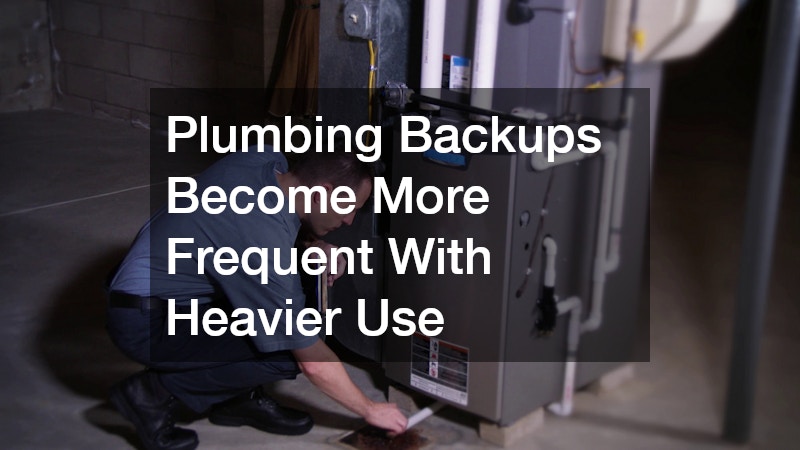
Drains that worked fine during a quieter first year can start backing up once daily foot traffic, kitchen use, or production volume increases. Grease, mineral buildup, and debris accumulate gradually, and by year two many businesses need professional attention that goes beyond a simple plunger fix. Scheduling routine commercial drain cleaning before a full blockage occurs is almost always cheaper than dealing with an emergency shutdown during business hours.
Restaurants, salons, and manufacturing facilities tend to see this issue sooner than typical offices, simply because of what goes down their drains daily. Building a maintenance schedule based on your specific type of business use, rather than a generic timeline, helps catch problems before they become expensive.
- Watch for slow drainage, gurgling sounds, or recurring odors as early warning signs
- Ask about camera inspections to identify buildup before it causes a full blockage
- Schedule preventive cleaning seasonally for kitchens and heavy-use restrooms
- Keep a record of past service visits to spot recurring problem areas
Aging Climate Control Systems Reach Their Breaking Point
A heating and cooling system that seemed adequate during buildout can reveal its limitations once a full year of real operating data comes in. Founders sometimes discover that the unit installed during construction was undersized for actual occupancy or equipment loads, leading to higher energy bills and uneven temperatures. What looked fine on paper during a walkthrough often can’t keep pace with a kitchen running at full capacity, a server room generating constant heat, or a retail space packed with customers on weekends.
The warning signs tend to show up gradually before they become urgent. Utility bills creep up month over month, certain rooms or zones never quite reach a comfortable temperature, and the system runs almost constantly just to maintain baseline conditions. By the time a technician is making the third or fourth emergency call in a year, the repair costs alone can approach a meaningful fraction of what a new system would cost.
This is also the point where many founders realize they’re comparing the wrong numbers. A single repair call might run a few hundred dollars, but when three or four of those add up over a year, plus the wasted energy from an inefficient unit working overtime, the math shifts quickly. In these cases, a proper commercial HVAC install, rather than another round of patchwork repairs, ends up being the more cost-effective long-term solution.
Budgeting for this in year two means getting ahead of it rather than reacting to a breakdown in July or January. Getting a load calculation done early, even before the old system fails outright, gives founders room to plan the capital expense on their own timeline instead of scrambling during an emergency.
This is also the point where insulation quality starts to matter more than founders initially expect. A rooftop unit or furnace that’s limping along in year two is often compensating for something else entirely: gaps around windows, thin walls, or attic insulation that’s degraded over a decade of use. Replacing the equipment without addressing the envelope means paying twice, once for the new system and again in wasted energy every month after.
Working with experienced commercial insulation contractors alongside any HVAC upgrade can reduce the load on the new system and lower monthly energy costs significantly, since a system fighting poor insulation will never perform efficiently no matter how well it is installed. A proper assessment typically looks at R-values in the roof and walls, air leakage around doors and loading docks, and whether existing insulation has settled or become moisture-damaged. In older leased spaces especially, these issues often go unnoticed until a new HVAC system is running constantly just to hold a stable temperature.
Founders who bundle these two projects together often see a faster payback period than expected, sometimes recovering the added insulation cost within two to three years through reduced utility bills. It also gives more negotiating leverage with landlords, since insulation upgrades can sometimes be framed as capital improvements worth splitting or offsetting against rent.
- Get an energy audit ($300-$600) before committing to a full system replacement — it pinpoints whether the unit, ductwork, or building envelope is actually driving costs
- Ask contractors whether your current ductwork is correctly sized for the new unit; mismatched ducts cause the new system to underperform and can void efficiency warranties
- Address insulation gaps at the same time as HVAC work — ripping open walls or ceilings twice to fix both issues separately roughly doubles labor costs
- Compare the cost of continued repairs against replacement over a five-year outlook, not just this year’s repair bill
- Factor in rising refrigerant costs (R-410A phase-downs are pushing prices up) when weighing repair versus replacement
- Ask about rebates or tax incentives for high-efficiency units, which can offset 10-30% of replacement cost
- Get at least two independent bids before signing, since HVAC quotes commonly vary by 20% or more for the same job
None of these costs need to derail a growing business, but they do need a place in your year-two budget rather than a surprise appearance on a monthly statement. The founders who navigate this stage most successfully are the ones who treat facility upkeep, equipment needs, and vendor contracts as ongoing planning items rather than afterthoughts. Take an hour this month to walk through your own operation with this list in hand and flag which of these costs are already creeping up. A little foresight now will save a much larger headache later.
